 English
 Español
  Português
  русский
  Français
  日本語
日本語  Deutsch
  tiếng Việt
  Italiano
  Nederlands
  ภาษาไทย
  Polski
  한국어
한국어  Svenska
  magyar
  Malay
Malay  বাংলা ভাষার
  Dansk
Dansk  Suomi
Suomi  हिन्दी
  Pilipino
  Türkçe
  Gaeilge
  العربية
  Indonesia
  Norsk
Norsk  تمل
تمل  český
český  ελληνικά
  український
  Javanese
  فارسی
فارسی  தமிழ்
தமிழ்  తెలుగు
  नेपाली
  Burmese
  български
  ລາວ
ລາວ  Latine
  Қазақша
  Euskal
  Azərbaycan
  Slovenský jazyk
  Македонски
  Lietuvos
  Eesti Keel
  Română
  Slovenski


How to Solve the Process Control Pain Points of Rewinders?
Chunlei has been deeply engaged in the automation industry for 15 years and has deep experience in rewinding equipment. Regarding the most troublesome problems in customers' production, our company has summarized the following points: unstable tension, deviation and uneven edges, troublesome changeover, and defects easily occurring during start/stop and splicing. The reason ordinary equipment on the market has high waste, low efficiency, and relies on experienced workers' skills is almost entirely due to these process shortcomings. Our equipment has made a full set of targeted optimizations for the above problems. All solutions are truly implemented and can help customers reduce losses, improve yield, and save labor.
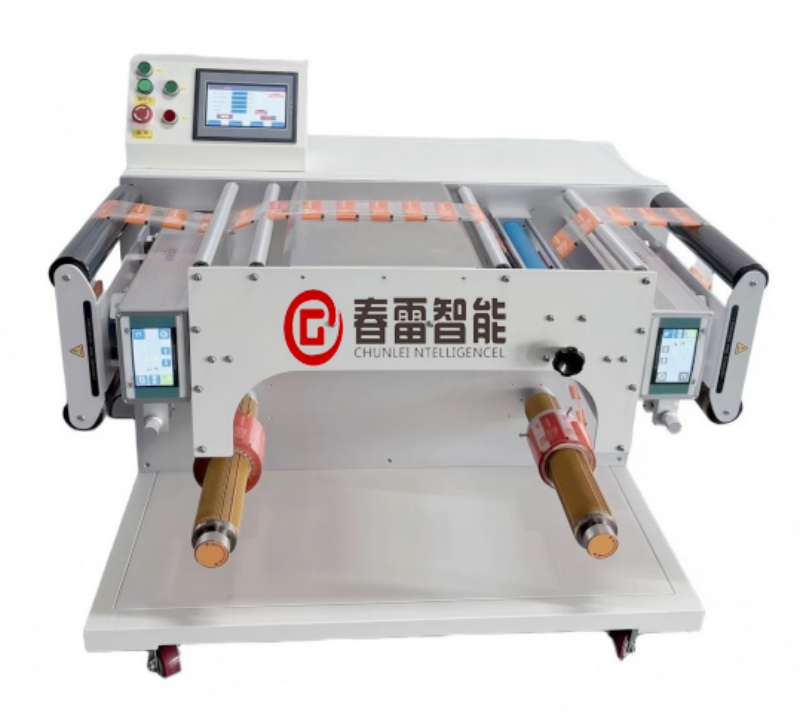
I. Completely Solve the Problem of Unstable Tension
Common industry problem: During equipment operation, the roll size keeps changing. During startup, shutdown, and splice passing, tension fluctuates greatly, easily stretching, wrinkling, or breaking the material. Rewinding may be loose inside and tight outside, causing core collapse, or tight outside and loose inside, causing roll explosion, resulting in high waste rates.
Our solutions:
1. Full-process closed-loop tension + taper tension adjustment: We do not rely on system-estimated tension. We use tension sensors to collect data accurately in real time, and servo motors adjust force in real time. As the roll grows larger, the system automatically gradually reduces rewinding tension, fundamentally preventing outer layers from crushing inner material. It remains stable for label film, film, and thin paper.
2. Real-time roll diameter calculation + inertia compensation: Large and small rolls have completely different inertia. Large rolls have high inertia and are prone to material overshoot; small rolls are prone to pulling and breaking material. Our equipment can calculate roll diameter in real time and automatically match inertia force, so startup does not pull abruptly and shutdown does not loosen the roll, ensuring stability throughout.
3. Three-stage independent tension control: The tensions of unwinding, traction, and rewinding are controlled separately without interfering with each other. It is especially suitable for label materials with liner, where the face label and liner are controlled separately, preventing misalignment, slippage, and displacement.
4. Dancer roller buffering and damping: Specifically designed to handle instantaneous tension impacts when passing splices or during sudden speed changes, buffering all fluctuations and eliminating sudden material breakage and wrinkling.
5. One-touch storage of material parameters: Commonly used material parameters such as paper, PET film, and release film are all stored in the system. When changing materials, simply recall them with one touch, avoiding repeated trial runs and parameter adjustment that waste materials.
II. Completely Solve the Problems of Deviation, Uneven End Faces, and Inaccurate Correction
Common industry problem: The machine deviates as soon as speed increases. Ordinary electric eyes cannot detect transparent film or thin materials, resulting in skewed finished roll end faces, uneven white margins, and edge flutter, leading to direct customer returns. Many machines still rely on pneumatic cylinder correction, which cannot keep up when speed increases.
Our solutions:
1. Material-specific detection sensors: Use photoelectric eyes for ordinary labels and paper; use ultrasonic correction for transparent film and release film. Regardless of whether the material is transparent, it can be accurately detected without detection failure.
2. Servo high-speed correction, faster and more stable response: Abandoning traditional pneumatic cylinder correction and using servo correction, positioning is accurate and there is no lag under high-speed operation, completely solving high-speed production deviation.
3. Hardware foundation to eliminate deviation at the root: The frame is thickened and stress-relieved so it does not deform over long-term use; all rollers ensure parallelism and are dynamically balanced, eliminating periodic deviation caused by machine vibration and roller runout.
4. Two-stage segmented correction: The unwinding end corrects first, and the rewinding end performs secondary fine correction, correcting layer by layer without deviation accumulation, ensuring neat end faces even on long web paths.
5. Intelligent signal filtering: Filters false signals caused by material flutter and rough edges, eliminating correction oscillation and edge flutter.
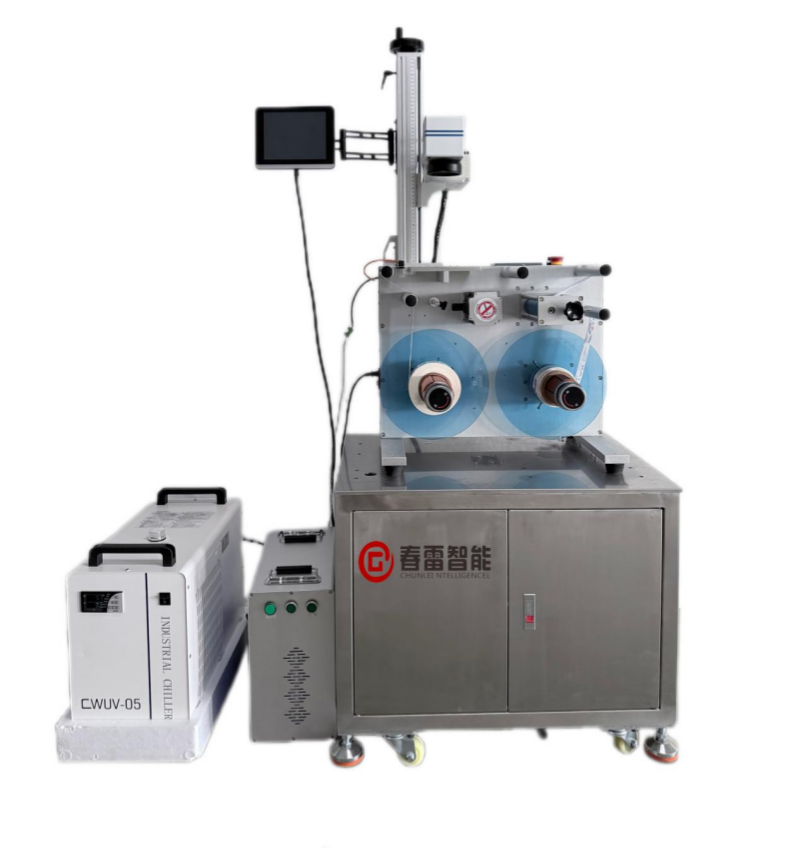
III. Solve the Problems of Difficult Changeover, Slow Debugging, and Reliance on Experienced Workers
Common industry problem: Changing width or material requires adjustment by experienced operators. Novices cannot adjust well. Setup takes a long time and trial runs produce much waste. Capacity is completely bottlenecked by debugging.
Our solutions:
1. One-touch recall of multiple process recipes: Tension, taper, correction sensitivity, and running speed for different materials are all pre-stored. When changing products, there is no need for repeated debugging; parameters switch with one touch.
2. User-friendly wizard debugging: The touchscreen interface is simple and intuitive. Follow the steps to set width and material thickness, and it can be used without relying on senior technicians. Ordinary employees can also operate it.
3. Quick assembly and disassembly structure: Air shaft quick roll change, guide components quick adjustment and removal, greatly shortening downtime for changing specifications and materials.
4. One-touch automatic sensor calibration: Tension and correction electric eyes require no repeated manual calibration. The system automatically calibrates, saving time and ensuring accuracy.
IV. Solve the Problems of Large Start/Stop Impact and Many Defects When Passing Splices
Common industry problem: Start/stop speed is too abrupt, easily breaking material or loosening material and causing wrinkles. The thickness of the web splice is large, and tension changes suddenly when passing rollers, causing 100% wrinkles and defects. Manual monitoring and speed reduction are required, resulting in high labor costs and large losses.
Our solutions:
1. S-curve flexible start/stop: The speed transition is very smooth, without the impact of sudden acceleration or sudden deceleration, protecting the material from stretching or loosening.
2. Automatic splice recognition, automatic speed change and tension adjustment: When the electric eye detects a splice, the equipment automatically slows down and fine-tunes tension, smoothly passing through the roller set. After the splice passes, it automatically resumes high-speed production without manual attendance, greatly reducing splice defects.
3. Automatic protective stop on material breakage: Once material breakage is detected, the equipment immediately stops and maintains tension, preventing material from loosening and wrapping around rollers, reducing machine failure and material waste.
V. Solve the Problems of Poor Multi-Material Adaptability and Out-of-Sync Double-Layer Materials
Common industry problem: Thin materials stretch easily, thick materials slip easily. Double-layer materials with label face and liner are prone to misalignment, displacement, and out-of-sync operation, resulting in low finished product qualification rates.
Our solutions:
1. Independent tension control for face and liner: For double-layer label materials, liner unwinding and face material feeding are controlled separately, completely eliminating interlayer slippage and label displacement.
2. Adjustable traction pressure: Adjust roller pressure according to material hardness and thickness. Soft materials are not crushed, and hard materials do not slip.
3. Multi-axis speed synchronization: Unwinding, traction, and rewinding speeds are matched in real time with no speed difference, eliminating stretching and wrinkling at the root.
Our rewinding equipment is specifically designed to solve common industry problems. It does not rely on the feel of experienced workers; instead, it relies on intelligent equipment algorithms to help customers save labor, save waste, improve yield, and increase capacity.
Send Inquiry


X
We use cookies to offer you a better browsing experience, analyze site traffic and personalize content. By using this site, you agree to our use of cookies.
Privacy Policy